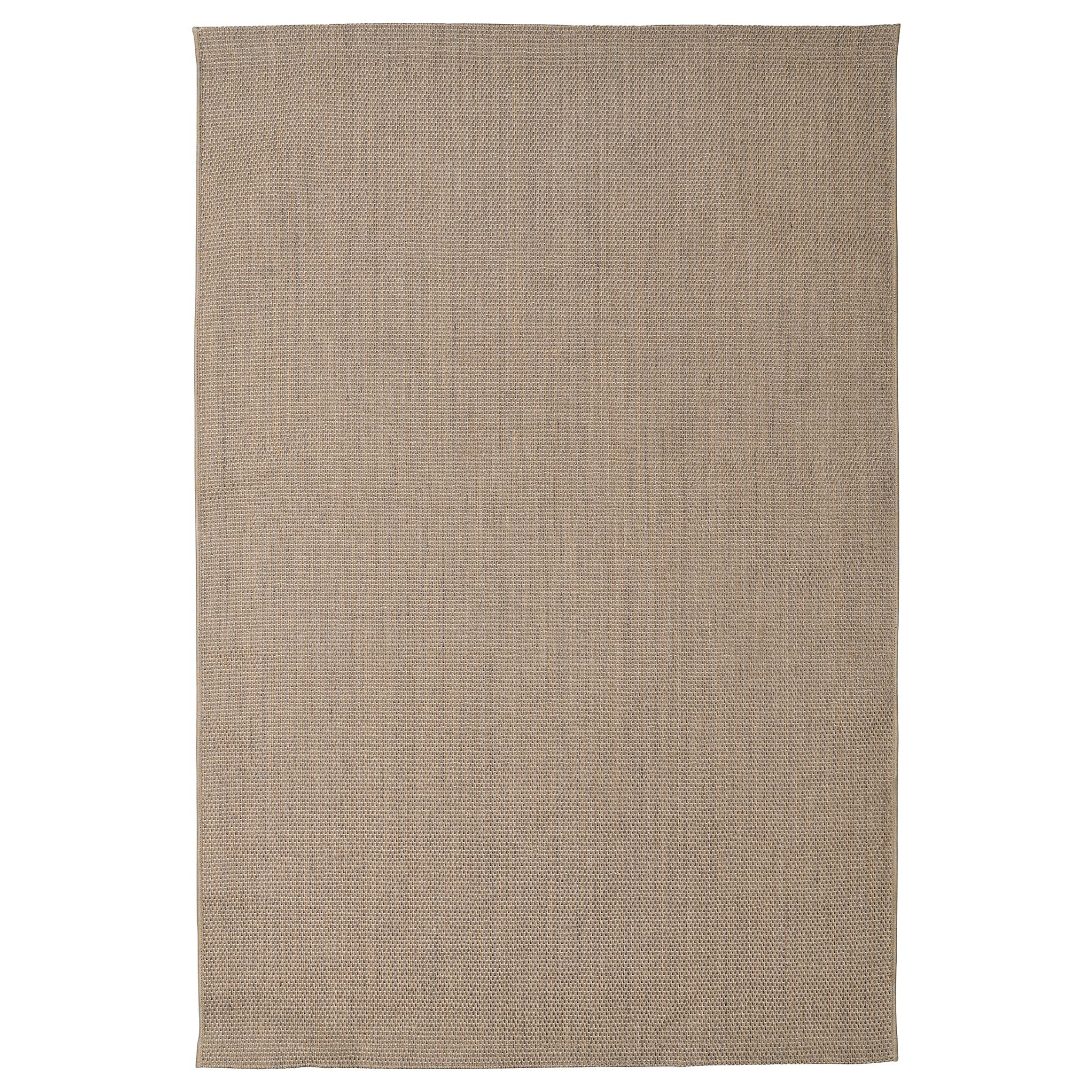
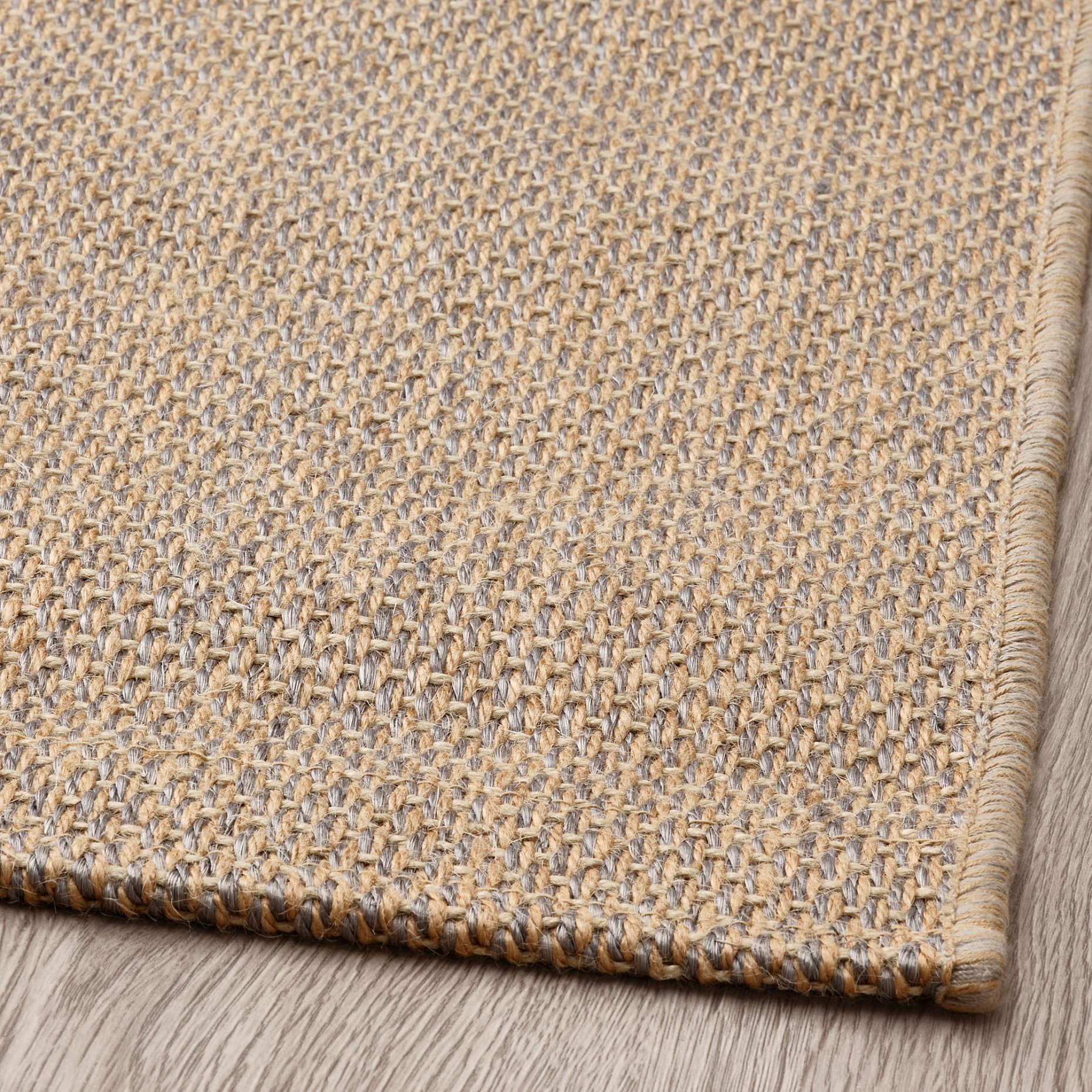
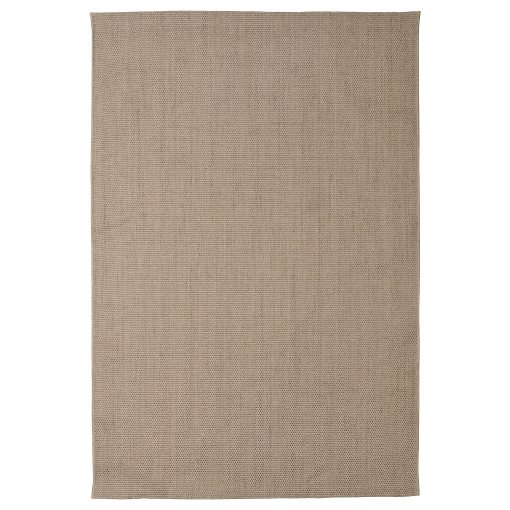
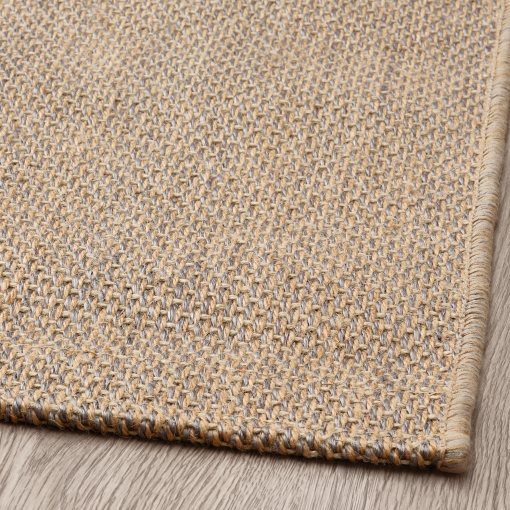
We blended natural jute and sisal to create this durable rug in neutral tones that creates a feeling of calm and harmony. Perfect to have under the dining table since it’s flatwoven.
Length: 195 cm
Area: 2.59 m²
Surface density: 1550 g/m²
Thickness: 4 mm
Length : 137 cm
Width :
Height :
Diameter : 13 cm
Gross Volume : 18.7 l
Backing: Natural latex
Do not wash.
Do not bleach.
Do not tumble dry.
Do not iron.
Do not dryclean.
Vacuum, shake and rotate the rug regularly.
Dry spots; remove immediately by scraping carefully towards the middle of the spot.
Wet spots; do not rub. Absorb with paper towels, damp with cloth and mild detergent.
Professional carpet cleaning when needed.
This rug fits under a 4-seat dining table, but can of course be used how and where you like in your home.
The rug is machine woven.
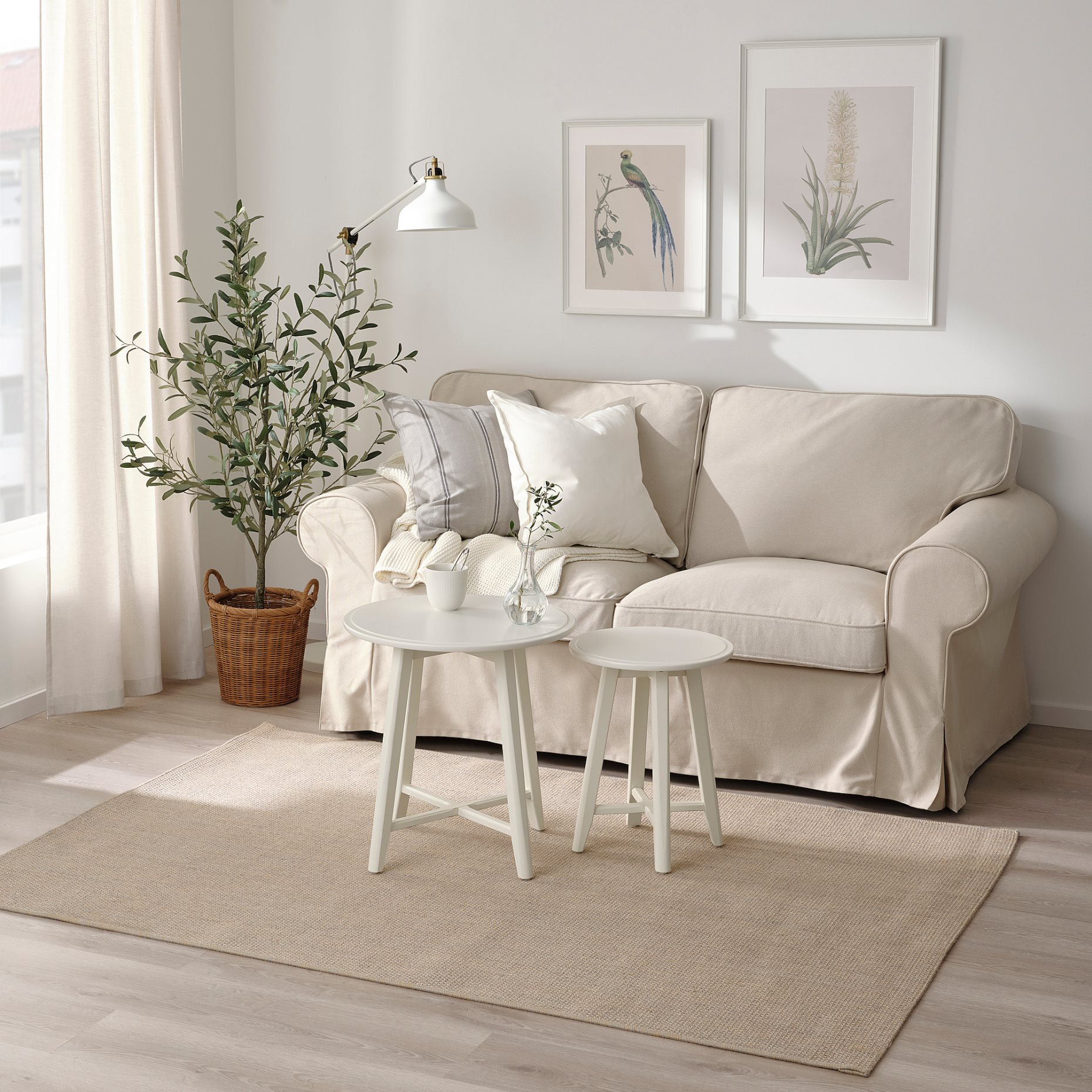
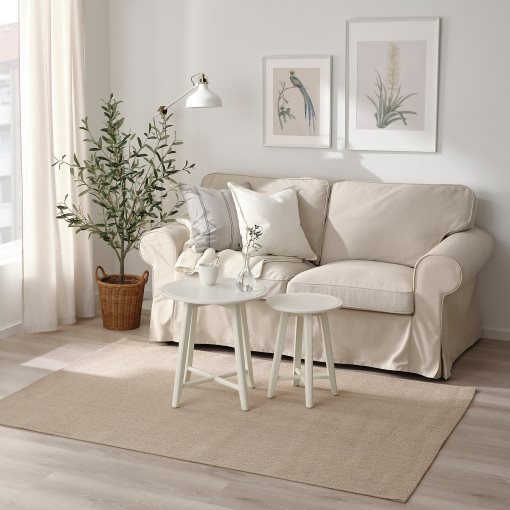
This rug fits with a 2-seat sofa, but can also fit other size sofas depending on how you place it.
Safety and compliance
This product has been tested for domestic use.
Ideal in your living room or under your dining table since the flat-woven surface makes it easy to pull out the chairs and vacuum.
The anti-skid backing protects the floor, keeps the rug in place and thereby reduces the risk of falling or tripping.
Material
What is jute?
Jute is a very hardwearing fibre that is found in the stem of the jute plant. It’s an easy-to-grow plant that requires very little fertiliser, pesticides or water and is ready to harvest after only 120 days. The jute fibre is often used for ropes and sacks but is also known for its silky-smooth lustre and can be spun into finer threads which are then woven. In our range we often use woven jute for items like curtains, rugs and furniture.
Material
What is sisal?
The sisal fibre is extracted from the long, sword-shaped leaves of the sisal and has traditionally been used in ropes and strings. The fibre is durable, stain resistant and sound insulating – so it’s excellent to weave rugs with. But it’s not just the fibre that is useful, the sisal has an extensive root system that can help limit soil erosion, and what’s left of the leaves can be used for bioenergy, fertilisers and animal feed.